
Chen group is an equal opportunity platform and is committed to increasing the diversity of its group members. It welcomes applications from women, members of minority groups, protected veterans and individuals with disabilities, as well as from others who would bring additional dimensions to the group’s research missions.
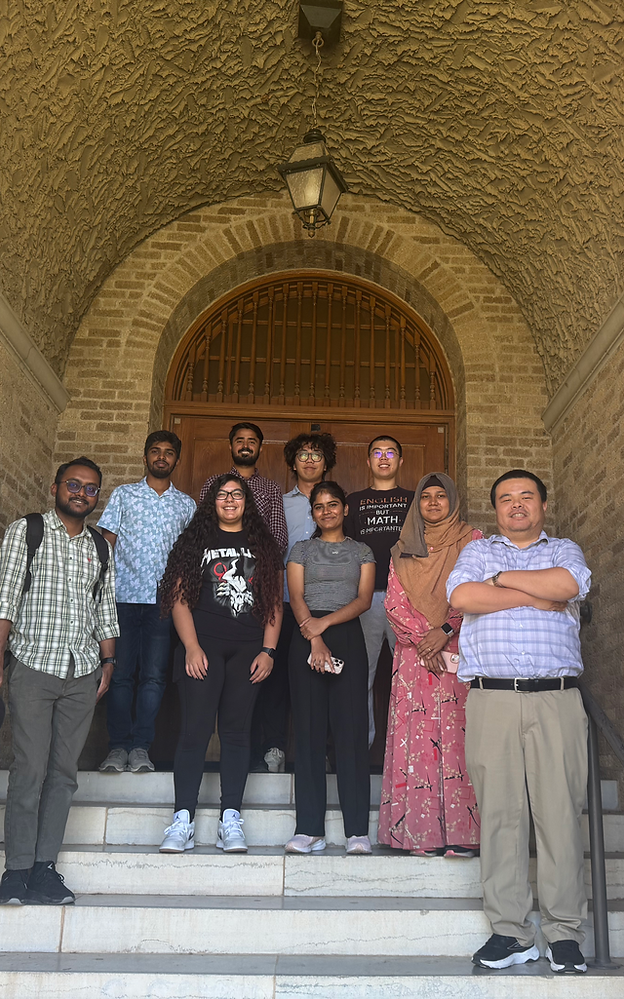
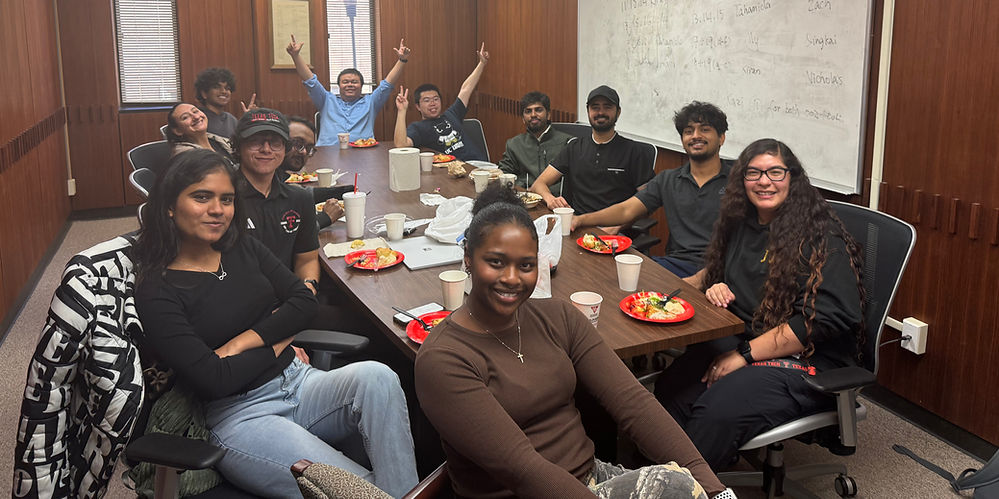

Principal Investigator

Hui Chen, PhD
With an emphasis on translational research, I hope to develop useful technologies that can make a difference in patients’ lives. I also hope to train the next generation of clinical chemistry engineers and scientists to work at the forefront of biosensing and diagnostic technologies, and to expand the boundaries of this exciting field.
Dr. Hui Chen is a faculty member at the Department of Chemistry and Biochemistry, in Texas Tech University (TTU).
Dr. Chen graduated from Shandong University, Jinan, China (BSc) in 2008 with a degree in Biochemistry and Tsinghua University, Beijing, China (ME) in 2011 with a degree in Chemical Engineering. He received his Ph.D. in Chemical Biology from University of Houston in 2017. After receiving postdoctoral trainings in Clinical Chemistry at Department of Pathology and Laboratory Medicine, University of Pennsylvania, and Translational Medicine at Brigham and Women's Hospital, Harvard Medical School, he started his own lab at TTU in 2024. Dr. Chen's lab strives to develop innovative accessible diagnostic tools to address unmet clinical challenges through integrating chemistry/biology/medicine, micro- and nanotechnology, and consumer electronics. His work has been recognized by some of the major news outlets including 360Dx, Medical Imaging Week, and AACC News Letter etc. He has mentored more than 30 postdoctoral research fellows, and undergraduate and graduate students.
Zhicheng Peng
A researcher specializing in neutrophil biology, immunotherapy, and translational diagnostics. His work elucidates how neutrophil autophagy and granule dynamics regulate non/pro-inflammatory cell death, tissue injury, and fibrosis. In parallel, He developed next-generation CAR T-cell strategies for solid tumors, including nanobody-based and bispecific designs targeting tumor antigen heterogeneity, while leveraging neutrophil-mediated extracellular matrix remodeling to enhance immune infiltration and therapeutic efficacy. Additionally, he advanced innovative immune cell-based diagnostic platforms that integrate microfluidics, synthetic biology, and machine learning to enable rapid, accessible, and precise disease detection.

Postdoctoral Fellow

Minhao Liu
Graduate student
Minhao holds a master's degree in computational and applied mathematics from the University of Chicago. His past research experience includes application of machine learning algorithms and redesign of syringe injectable Nano mesh. Currently, He is particularly interested in microfluidics and developing the next generation diagnostic technology.

Nazmul Huda Ovi
Graduate student
Ovi holds a master's degree in Chemistry from the Shahjalal University of Science and Technology. He worked as a Research and Development executive at some reputed pharmaceutical industry in Bangladesh. Currently, he is doing his research on developing AI enhanced LFA device for detecting various disease.

Brianna Garcia
Graduate student
Brianna holds both a B.S. and M.S. in Forensic Science with a concentration in Chemistry from the University of Texas at El Paso and Texas Tech University. Her previous research experience is in biosensing and noninvasive sensing for forensic applications. Now, her research is focused on using CRISPR-based technology to detect infectious diseases and develop accessible diagnostic tools for future medical use.

Muhammad Wasim
Graduate student
Muhammad Wasim completed his master’s degree in Analytical Chemistry, where he specialized in Raman spectroscopy and Surface-Enhanced Raman Spectroscopy (SERS). With a strong background and multiple publications, Muhammad has demonstrated the high sensitivity and selectivity of these techniques in molecular identification and structural analysis. Currently, his research focuses on developing micro bubbling digital assays for disease diagnosis and advancing microfluidic technologies. Through this work, Muhammad aims to gain expertise in advanced analytical techniques to drive innovation in biosensing and diagnostics within the healthcare industry.

Md. Roman Sarkar
Graduate Student
Md. Roman Sarkar, a graduate student at Texas Tech University, is pursuing a Master of Science in Interdisciplinary Studies with a concentration in Biology and Chemistry. He completed a Bachelor of Pharmacy degree from Manarat International University in Bangladesh.
Roman is committed to addressing the multidisciplinary challenges associated with cancer diagnosis and treatment. His current research project focuses on developing an AI-enhanced Lateral Flow Immunoassay (LFIA) for cancer diagnosis. This project aims to enhance the sensitivity, specificity, and clinical applicability of point-of-care diagnostic tools. Roman’s research interest is to develop affordable and accessible diagnostic and treatment options for underserved communities.

Trishelle Williams
Research Assistant
Trishelle is a pre-medical student pursuing a B.S. in Psychological Sciences and a minor in Chemistry. Her current research interests center on genome editing and accessible diagnostic technologies. Through her research experience, she aims to further her understanding of biomedical technology and applying it to improve healthcare access in underserved communities.

Ryan Kim

Jeshua Podliska
Graduate Student
Jeshua Podliska, has a B.S. in Biochemistry from Texas Tech University and is pursuing a PhD in Chemistry. His previous research was on materials science with a focus on surface and colloid chemistry. Now his focus is on using CRISPR-based technology for the detection of single nucleotide variants associated with cancer and other chronic illnesses and to make those tools accessible for the future medical testing.

Anvitha Rayala
Research Assistant
Anvitha is a junior at Flower Mound High School with a deep passion for public health and a long-term goal of pursuing a career in medicine. Driven by her commitment to health equity, she focuses her research on expanding accessibility through point-of-care testing and hopes to improve medical imaging technologies for underserved communities. Anvitha founded a medical advocacy organization and has raised over $30,000 to establish rural health clinic initiatives across multiple countries, providing care for more than 300 patients. She is also a strong advocate for emergency preparedness, facilitating the certification of over 55 high school students in Narcan administration, CPR, AED use, and Stop the Bleeding training. Her academic interests extend to image segmentation for diagnostic tools, stem cell therapy, and CRISPR research, reflecting her dedication to the intersection of medicine, innovation, and global health impact.

Subarna Akter
Research Assistant
Subarna Akter holds a bachelor’s degree from the Department of Soil, Water and Environment at University of Dhaka, Bangladesh. Her research interests include biosensor development, microfluidic systems, and colorimetric analysis for biomedical applications. She is particularly interested in developing low-cost diagnostic tools for biomarker detection and improving accessibility in healthcare technologies.

Michael Castillo
Research Assistant
Michael is pursuing a B.S. in Chemical Engineering and a minor in Chemistry at Texas Tech University. He plans to conduct research of the principles in Cancer-Diagnostics, POC-Testing and Raman Spectroscopy.

Samarah Peterson
Research Assistant
Samarah Peterson is from Austin, Texas. She transferred to Texas Tech University from Austin Community College in the spring of 2026. She is an undergraduate student majoring in microbiology, a member of the Honors College, and a Presidential Scholar. After graduation, she plans to attend medical school and pursue a career as a hematologist or endocrinologist. Her research interests include improving healthcare access to underserved communities.

Prabhav Kuruva
Research Assistant
Prabhav is a freshman pursuing Biochemistry at Texas Tech University. His goal is to attend medical school in the future; however, he has not yet decided on the specialty he would like to pursue. His research interests are in diagnostic technology, such as lateral flow assays, biosensor development, and other biomedical applications. He also hopes to pursue research for several years into the future. He is eager to apply his skills and knowledge to any endeavor he pursues, and he is committed to always learning.
Research Assistant
Ryan Kim is an undergraduate student pursuing a B.S. in Biochemistry with a minor in Biology at Texas Tech University and a member of the Honors College. His research interests are CRISPR gene editing, Polymerase Chain Reaction (PCR), and diagnostic assay development. He is interested in working in the healthcare field and is currently completing his training as an Emergency Medical Technician (EMT). He hopes to combine his scientific background, research experience, and clinical training to improve patient care and advance medical diagnostics.
Alumni

Shamsuttiyeba Shifa


Aryan Shinde

Hariz Nawaz

Kiara Corona

Regan Abshire

Lance Baker

Lauren Lutrice Phillips
Isabela Bejgel
